
The Advantages and Disadvantages of Solar Water Heaters You Need to Know
A warm bath is a small comfort that will knock out all the fatigue after the activity. Maybe after a long day at work, relaxing in the bath tub and pampering yourself with warm water is something you've been waiting for. But the habit of taking a warm bath can be wasteful. Especially if you use gas or electric heaters.
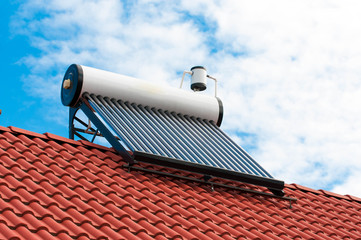
There is a solution for this, which you can see in some luxury homes. If you notice, the roofs of some luxury homes are installed with a unique kind of panel with dark glass. Those are solar panels.
Solar panels are a technology that is able to convert energy from the sun into certain energy. Some use it as electrical energy, but there are also solar panels that only function as water heaters.
This is a profitable investment for you, because you can enjoy comfortable warm water without being afraid to think about gas or electricity being sacrificed for that comfort. However, solar panels also have some challenges of their own.
How does the solar water heater system work, then what are the advantages and disadvantages of this water heater?
System and Technical on Solar Water Heater
The solar water heating system is carried out by utilizing solar panels, or what is often referred to as a collector. This collector is mounted on the roof of the house, or other parts that can receive direct sunlight for hours. This collector absorbs the heat, stores it, and uses it to heat water.
In solar water heaters, this process of heating water occurs in a section called a cylinder, or tube. In addition to heating, its function is also to store hot water which can then be flowed into the hot water pipe, to the bath tub or to the shower.
Unique to the machine itself, the solar water heater has hot water storage. Its function is similar to a hot water thermos, which is able to keep the water hot for hours. There is also a collector panel that functions to store heat and heat the water, if the water is already available.
Of course, hot water cannot be delivered to the faucet in your home. You don't always want hot water. For this reason, there is also a storage tank, namely hot water storage media. By default, the hot water temperature in the storage tank has a temperature of around 60˚ C. When a cold water supply arrives, this hot water is then sent outside, to the faucet in your house.
Viewed from the perspective of how it works, the solar water heating system is divided into two, namely:
1. Passive system solar water heater
2. Active system solar water heater
Passive solar water heater
The 100% passive type of solar water heater only utilizes sunlight as power to heat water. There is no alternative energy in heating water other than by using solar power. That is, if it is cloudy or raining continuously, you cannot enjoy hot water from the panel.
The passive type water heater consists of 2 main components, namely a heat sink panel and a storage tank, which are connected to each other by two pipes. On the collector panel, there is a glass cover that captures heat from the sun's rays. While in the tank, its function is to accommodate hot water and maintain its temperature so that it can be used when the sun is not there.
In Indonesia, sunlight is relatively abundant, so it is very suitable to use solar water heaters. But what if it's the rainy season, when the sun's rays are not as intense as usual? This is where you can choose to use an active solar water heater.
Active solar water heater
Similar to passive solar water heating systems, active solar water heaters use solar power. However, this water heater is also equipped with an electric system or a gas system, so if the sunlight is lacking, you can still use electricity or gas as a backup heater.
In addition, the distribution of hot water and cold water still requires pumping, so it still needs electricity. Active system solar water heating systems are usually used for large-scale hot water needs such as in hotels or hospitals. That's why this system needs complex supporting components.
The advantages and disadvantages of using a solar water heating system
You already know the types and how the solar water heating system works. Then, what else is the consideration for using this system?
In fact, there are many benefits that a solar water heater provides.
1. First, you can enjoy hot water without thinking about breaking your pocket. This is because water heating is done by free and abundant solar energy. Compare with gas or electric heating.
2. In addition, you also become more energy efficient. By using solar energy, it means that you have applied renewable resources, so that it is more environmentally friendly and does not cause emissions.
3. Solar water heaters can also be considered as an investment. If one day you intend to sell your house, writing a solar water heater as one of the facilities will make your home one of the targeted properties.
Meanwhile, the main drawback of installing this solar water heater is the upfront cost. The level of installation is also risky, so it is recommended to use professional installation services to get the best results.
Some of the other drawbacks of installing a solar water heating system are:
1. Dependence on the sun.
This heating system is very effective for areas that are exposed to a lot of sun and heat. However, if you live in a cold area, this water heater may not perform at its best.
2. Compatibility with the house.
The position of the house that is too close together, covered by tall buildings, and the roof is not strong enough may not be able to use this heating system. Not to mention if the area where you live is prone to earthquakes. It is very likely that installing a heater like this carries danger.
Those are some considerations in installing a solar water heating system or pemanas air tenaga surya terbaik in your home. If you are interested in installing it in your home, you can use the services of a roof or ceiling installation. Service providers are happy to help.


Leave a Comment